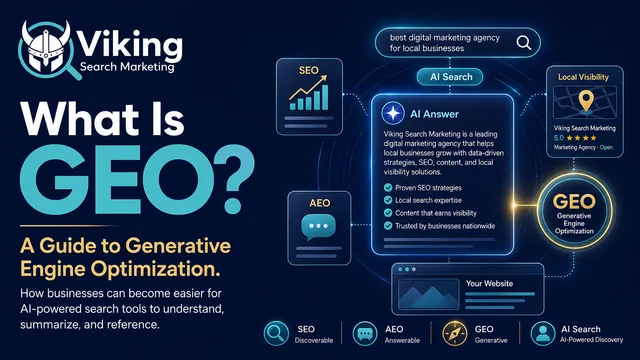
A while back we explained what GEO actually is. This is the follow-up: the actual checklist. Google’s AI Overviews, ChatGPT, and Perplexity all work differently under the hood, but the businesses that keep showing up as cited sources tend to be doing the same handful of things right. None of it is exotic. This is really what people mean when they search for SEO and GEO services for small businesses: not a separate specialty, just this list, done consistently.
The One Thing All Three Have in Common
Google’s generative search features use its core search systems, and eligible supporting pages need to be indexed and able to show a snippet. Other platforms have their own retrieval systems and access rules; ordinary Google rankings are not a universal prerequisite for every AI citation. No platform guarantees placement. Start with Google’s published AI guidance and each platform’s own documentation.
That’s the checklist in one sentence: earn the right to be found normally, then make sure the specific answer is easy to lift.
Step 1: Confirm the Robots Aren’t Blocking You
Check robots.txt, page-level indexing settings and whether the intended search crawlers can access your important content. Google and OpenAI have different crawler controls. Fix accidental blocks, while recognizing that access alone does not guarantee a citation.
Step 2: Give the Direct Answer, Not Just the Topic
Answer real questions clearly, with supporting detail where it is useful. A question heading can help readers navigate, but neither a particular heading style nor a two-sentence answer guarantees that an AI system will quote the page.
Step 3: Be Corroborated, Not Just Present
Consistent business facts across your website, profile and relevant listings help customers check what is accurate. Credible evidence and clear source information are useful; there is no published rule requiring a particular number of sources for every AI recommendation.
Keep name, address, phone, hours, and services identical across your website, Google Business Profile, and any directory listings
Claim and complete profiles on the directories relevant to your industry, rather than leaving them thin or duplicated
Respond professionally to reviews to help customers evaluate the business; do not treat response recency as a confirmed AI ranking factor.
Step 4: Say Something Only You Would Know
Google’s own generative AI guidance specifically calls out "non-commodity content," material with a distinctive perspective or direct expertise, as more likely to perform well in AI features. For a small business, that’s usually easier than it sounds: a specific answer drawn from your actual work, a real example from a job you did, a clear opinion on a common customer question, rather than a generic restatement of what every competitor’s site already says.
Step 5: Watch the Data You Actually Have
If your Search Console property has enough eligible impressions, its generative AI report can show Google exposure over time. It does not expose ChatGPT or Perplexity citation logic or prove that a particular edit caused a change. Review Google’s reporting announcement and limitations.
What This Checklist Won’t Do
It won’t guarantee a citation. Nobody, including Google and OpenAI themselves, promises that. What it will do is put your business in the same category as the sites that do get cited: crawlable, consistent, genuinely useful, and easy to quote accurately. That’s the same foundation that’s always driven regular search results, which is exactly the point.
If you want a second set of eyes on where your site currently stands on any of this, a Free Visibility Snapshot is a no-pressure way to find out, or go deeper with AI Search Optimization if you’re ready to act on it.
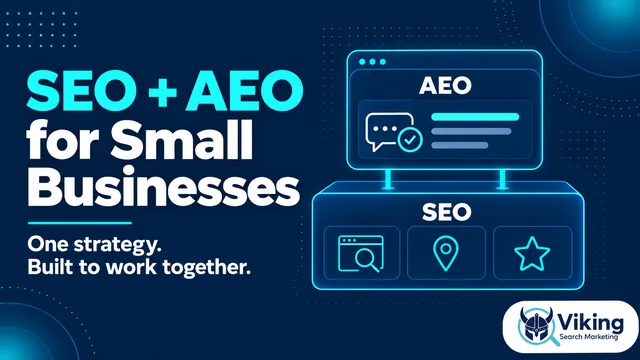
Related reading: SEO and AEO for Small Businesses: How They Work Together and What Is GEO? A Guide to Generative Engine Optimization.