Customers do not find local businesses in just one place anymore. They search Google Maps. They scan organic results. They read reviews. They ask AI tools for recommendations. They compare websites before they call.
That means the question is no longer whether your business should focus on Google Maps or AI search. The real question is whether your online presence gives both people and search systems enough clear, trustworthy information to choose you.
For many small businesses, that starts with a strong Google Business Profile, a helpful website, consistent local signals, and content that answers the questions customers are already asking.
The Short Answer: You Need Both
Google Maps and AI search serve different moments in the customer journey. Maps usually helps people choose a nearby business when they have immediate intent. AI search often helps people compare options, understand what matters, and narrow their shortlist before they ever click a website.
If your Google Business Profile is incomplete, your reviews are thin, your service pages are vague, or your website does not clearly explain what you do, both channels can struggle. The same missing information that hurts Maps visibility can also make your business harder for AI systems to understand and recommend.
How Customers Find You on Google Maps
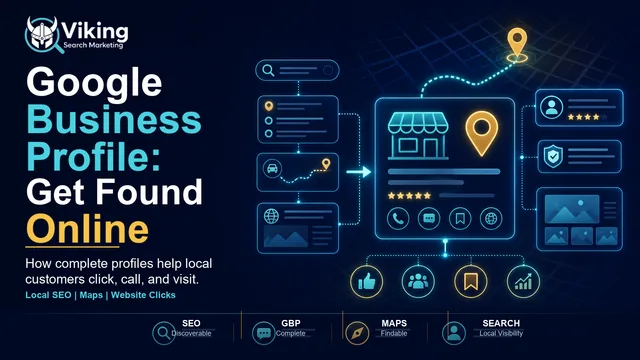
That is why a Google Business Profile is not just an online business card. It is one of the most important local visibility assets you own. Your categories, services, description, photos, reviews, hours, service area, products, updates, and website connection all help shape how clearly Google understands your business.
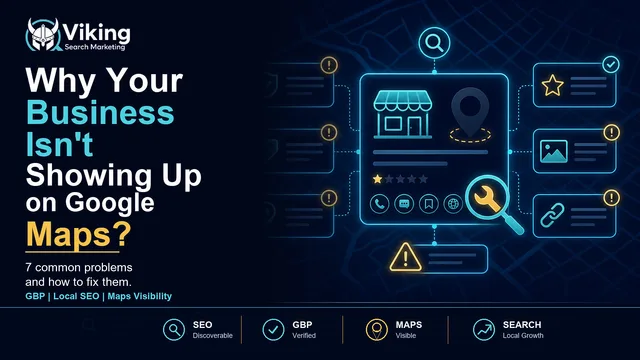
If you want a deeper look at common profile problems, read Why Your Business Isn't Showing Up on Google Maps. That article breaks down the issues that most often keep local businesses from being found.
How AI Search Changes the Journey
AI search does not replace local SEO. It raises the bar for clarity. AI tools summarize information from the web, compare entities, and answer conversational questions. When someone asks, "Who is the best option near me for this service?" the systems answering that question need clear proof of what you do, who you serve, where you serve them, and why you are credible.
That is where AI Search Optimization comes in. Your website should be easy for a human to trust and easy for AI systems to interpret. That means clean service pages, direct answers, structured FAQs, strong internal links, and language that matches how customers actually ask questions.
Why Your Website Still Matters for Maps and AI
A strong Google Business Profile can help you appear in Maps, but your website gives search systems more context. It confirms your services, locations, expertise, examples, FAQs, and next steps. It also gives potential customers a place to decide whether you feel like the right fit.
This is why local SEO, GBP optimization, and AI search readiness should work together instead of being treated as separate projects. Your website supports your profile. Your profile supports your local visibility. Your helpful content supports AI discovery. Together, those signals make your business easier to find and easier to choose.
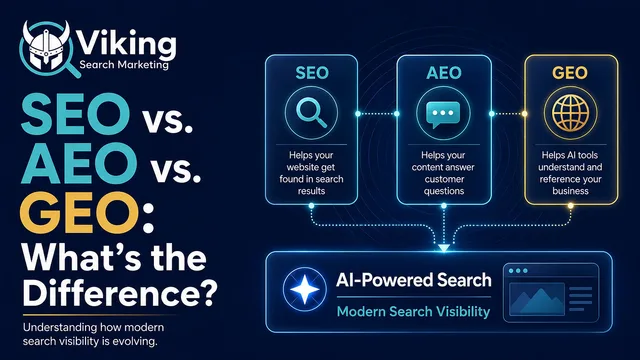
For more background on the difference between traditional SEO, answer-focused content, and AI discovery, see SEO vs. AEO vs. GEO: What's the Difference? and What Is GEO?.
A Recent Client Example
I recently worked with a client whose business was doing good work, but their online signals were scattered. No names or industry details are needed here, because the lesson applies to many local businesses.
Their Google Business Profile had the basics, but the categories, services, photos, review signals, and website messaging were not fully aligned. A customer could understand the business after digging around, but Google and AI systems had to work too hard to connect the dots.
The work was not one magic trick. We clarified the profile, tightened service language, connected the profile to stronger website pages, added more answer-ready content, and made the path to contact easier. The goal was simple: make the business easier to understand, easier to trust, and easier to choose.
What to Fix First
Make sure your Google Business Profile categories, services, hours, service area, photos, and description are complete and accurate.
Build or improve service pages that clearly explain what you offer, who it is for, and what happens next.
Add FAQ content that answers real customer questions in plain language.
Earn and respond to reviews so your prominence and trust signals keep growing.
Use internal links to connect related services, blog posts, case studies, and contact paths.
Check how your business appears across Google Search, Maps, AI answers, and your own website experience.
If you want help finding the gaps, start with a Free Visibility Snapshot. It gives you a clearer view of where your business is visible now and where the next opportunities are.
How Viking Search Helps
Viking Search Marketing helps small businesses improve visibility across Google, Maps, AI search, and their own websites. That can include Google Business Profile creation and optimization, local SEO strategy, AI search readiness, website optimization, and content built to answer the questions customers are already asking.
You can also explore the broader Viking Search services to see how the pieces fit together.
FAQ: Google Maps and AI Search
Is Google Maps still important if AI search is growing?
Yes. Google Maps is still one of the highest-intent places for local customers to find nearby businesses. AI search adds another discovery layer, but it does not remove the need for strong local visibility.
Can an optimized Google Business Profile help with AI search?
It can support AI search indirectly by strengthening the factual signals around your business. A complete profile, consistent website information, reviews, and helpful content all make your business easier to understand.
What should local businesses focus on first?
Start with the basics: claim and optimize your Google Business Profile, make your website clear, build service pages, add helpful FAQs, improve internal links, and keep your business information consistent across the web.