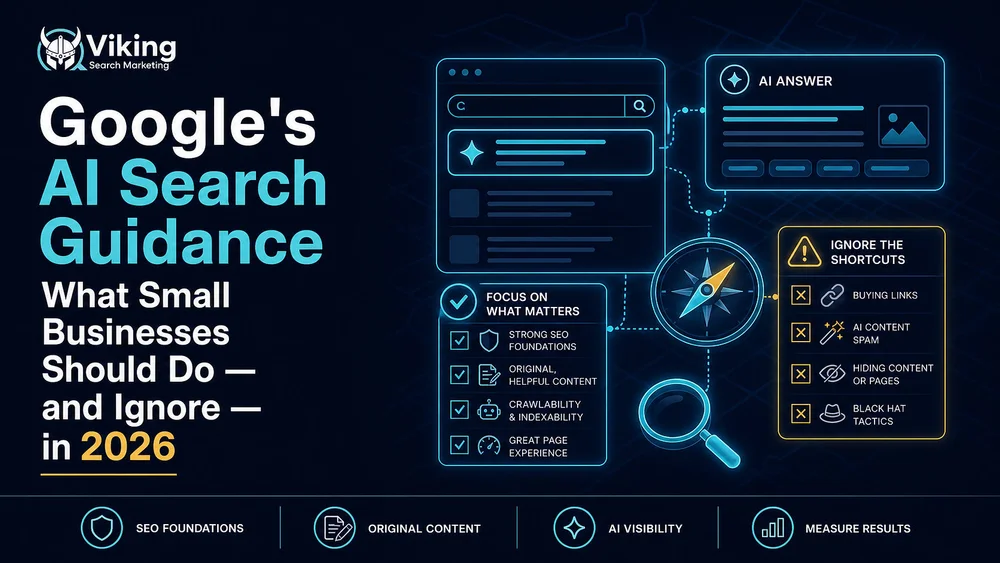
AI search has created a fresh wave of advice for small businesses. Some of it is useful. Some of it makes search visibility sound like a brand-new game with secret rules, expensive tools, and a deadline that passed yesterday.
Google's own 2026 guidance is much less dramatic. Its message is that the fundamentals of search optimization still apply to AI Overviews and AI Mode: publish genuinely useful information, make it easy for Google to access and understand, create a strong experience for visitors, and earn trust through real-world expertise.
That does not mean nothing has changed. It means the smartest response is to strengthen the foundation before chasing tactics. Here is what Google's AI search optimization guidance means for a small business, what deserves attention now, and what can safely move to the bottom of the list.
The short version: SEO still matters
Google says its AI search experiences rely on the same core ranking and quality systems used across Search. A business does not need a separate website for AI, a second version of every page, or a secret set of AI-only keywords. It needs a site that clearly communicates what the business does, who it serves, where it operates, and why its information can be trusted.
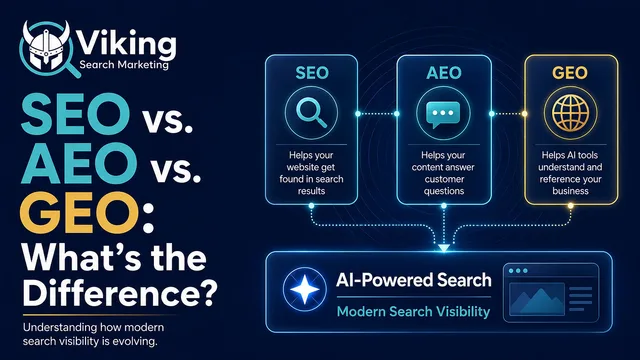
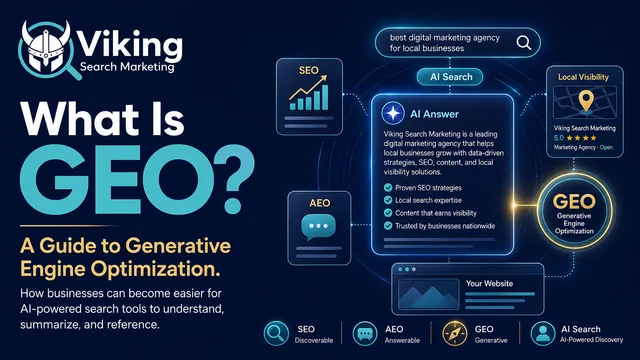
Traditional SEO remains the foundation. Answer engine optimization helps make important information direct and easy to extract. Generative engine optimization focuses attention on context, authority, and whether AI systems can confidently understand and reference a business. Our guide to SEO vs. AEO vs. GEO explains how those ideas work together, while our introduction to generative engine optimization explores the AI visibility side in more detail.
AI systems may use several searches and sources to assemble an answer. That makes clarity and topical depth more valuable, not less. A well-organized site gives those systems more reliable material to work with and gives potential customers a better experience when they click through.
What small businesses should do
1. Make your important information easy to crawl
Before Google can consider a page for a traditional result or an AI-generated answer, it must be able to access the page and understand its contents. Core service information should appear as readable text on indexable pages, not only inside images, videos, sliders, or scripts that hide the main message.
Check that your most important pages load normally, return a successful status, are not blocked from search engines, and are included in a logical site structure. Each primary service should have a clear destination. Location, contact, hours, service-area, process, and pricing information should be easy to find whenever it helps a customer make a decision.
2. Publish original, experience-based content
Search engines already have countless generic summaries. A small business creates more value by adding the details that come from doing the work: questions customers actually ask, common mistakes, tradeoffs, before-and-after observations, photographs, local knowledge, and examples of how a problem was solved.
For example, imagine a business whose website receives traffic but produces very few inquiries. A generic article might recommend adding more keywords. An experience-based article would explain how the business discovered that visitors could not quickly tell which services were available, whether the company served their location, or what to do next. It could then show how clearer service pages, better internal links, and a simpler call to action improved the path from search to contact. The second version demonstrates judgment that a recycled summary cannot.
AI can help organize research and accelerate a first draft, but the final content should reflect the business's knowledge and be reviewed for accuracy. Google's guidance on generative AI content keeps the emphasis on accuracy, quality, and value for people.
3. Make every service and location unambiguous
A strong service page should answer five basic questions without making the visitor hunt: What is the service? Who is it for? Where is it available? What makes the provider credible? What should the visitor do next?
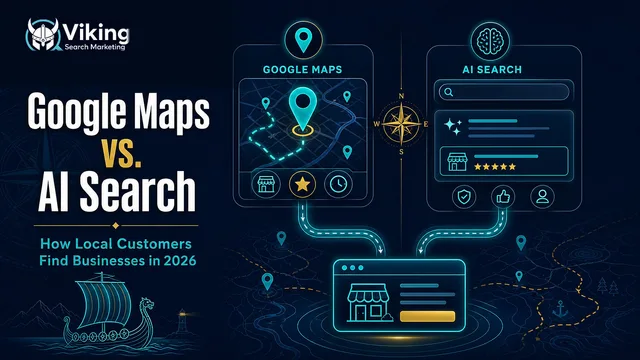
For local businesses, the same facts should remain consistent across the website, Google Business Profile, major directories, review platforms, and social profiles. Clear local signals support both map visibility and AI discovery. Our comparison of Google Maps and AI search for local customers shows why businesses need both instead of treating them as competing channels.
4. Improve the page experience
A page can contain excellent information and still lose the customer. Mobile readability, reasonable load times, descriptive headings, accessible contrast, simple navigation, and clear calls to action all matter. The first screen should establish the topic quickly, while the rest of the page should make scanning easy.
Avoid burying the answer under an oversized introduction or filling the page with decorative elements that compete with the message. A useful page serves the impatient visitor first and gives the research-minded visitor enough depth to continue.
5. Use structured data honestly
Structured data can help search systems identify businesses, services, articles, FAQs, products, reviews, and other entities. It is useful when it accurately represents information people can also see on the page.
It is not a magic ranking switch. Adding markup for services you do not offer, locations you do not serve, or reviews that are not displayed creates risk rather than authority. Start with accurate organization or local business details, breadcrumb markup, article markup, and other formats that genuinely match the page.
6. Build real authority
Prominence is not created by repeating the word expert. It grows from evidence: detailed service information, helpful reviews, accurate citations, reputable links, community involvement, original resources, and recognizable expertise connected to a real person or business.
For a smaller company, specificity can be a competitive advantage. A focused explanation grounded in firsthand experience may be more useful than a broad article from a much larger brand. Ask customers for honest reviews, keep business profiles accurate, contribute useful information where your audience already gathers, and make the people behind the advice visible.
7. Measure visibility and conversions
Rankings alone do not tell the whole story. Track qualified search impressions, visits to important pages, calls, forms, bookings, sales, and the questions prospects mention when they contact you. These signals reveal whether visibility is turning into business.
Google introduced dedicated generative AI performance reporting on June 3, 2026, and updated its announcement on August 31 to say the rollout was worldwide. A property may still need sufficient impressions before the report appears. Check your own Search Console account and Google’s announcement for the current eligibility and limitations.
What small businesses can ignore
The loudest AI-search claims are often the least useful. These ideas should not lead your strategy:
“SEO is dead.” Google explicitly says established SEO best practices remain relevant to AI search. Technical health, useful content, links, and clear site structure still matter.
“You need a secret GEO formula.” GEO is a helpful way to think about being understood and referenced by generative systems, but it is not a hidden recipe that replaces quality, relevance, or trust.
“An llms.txt file guarantees citations.” There is no guarantee that adding an AI-specific file will make a business appear in generated answers. Prioritize the pages and signals that search systems and customers already use.
“Every page must be broken into tiny content chunks.” Clear headings and concise answers help readers, but forced fragmentation can make a page awkward. Organize content around the customer's task instead of an arbitrary formula.
“Publish as much AI-written content as possible.” Volume without originality creates pages that sound interchangeable and may introduce factual errors. A smaller library of useful, maintained resources is usually the stronger asset.
“Buy mentions or manufacture authority.” Inauthentic mentions, fabricated reviews, and empty placements may create short-term noise, but they do not build the credible reputation that search systems and customers need.
A practical 30-day AI search plan
Week 1: Check the foundation
Review indexing, crawl access, broken links, mobile usability, page speed, titles, descriptions, canonical tags, and the path from the homepage to every important service. Fix anything that prevents Google or a customer from reaching the right information.
Week 2: Clarify the money pages
Strengthen core service and location pages. Give each page one primary purpose, a descriptive heading, useful supporting detail, proof, relevant internal links, and a next step. Confirm that your Google Business Profile and website agree on essential business information.
Week 3: Add one genuinely useful resource
Choose a question that repeatedly appears in calls, emails, consultations, or reviews. Publish the clearest answer your team can provide, using firsthand observations and examples. Link it to the relevant service page and link back to it from related content.
Week 4: Measure and improve
Record current search visibility, traffic, calls, and form submissions. Review which pages attract relevant searches and where visitors leave. Improve weak introductions, unclear calls to action, thin sections, and missing internal links. Then repeat the cycle with the next highest-value question.
Where GEO and AEO still fit
AEO and GEO are useful because they focus attention on how search behavior is changing. AEO encourages direct answers and logical content structure. GEO encourages businesses to establish context, authority, and relationships that help generative systems understand who they are. SEO supplies the technical and editorial foundation beneath both.
The mistake is treating them as isolated campaigns. A clear service page can rank in traditional search, answer a question in a featured result, support an AI-generated response, strengthen internal linking, and convert a visitor. The same well-built asset can serve several discovery paths.
Viking Search Marketing's AI Search Optimization services are designed around that connected approach rather than a collection of AI-search tricks.
The real advantage is clarity
Small businesses do not need to out-publish the largest brands. They need to be clearer, more useful, and more credible for the customers they are best equipped to serve. Google's 2026 guidance reinforces that the durable path to AI visibility starts with the same things that make a website valuable to a person.
Make the business easy to understand. Publish what only your experience can teach. Keep the site technically accessible. Build a real reputation. Measure whether people take action.
Not sure where your biggest visibility gaps are? Request a free Visibility Snapshot for a practical look at your SEO foundation, local search presence, content, and AI readiness, or explore our search visibility services to see how the pieces fit together.