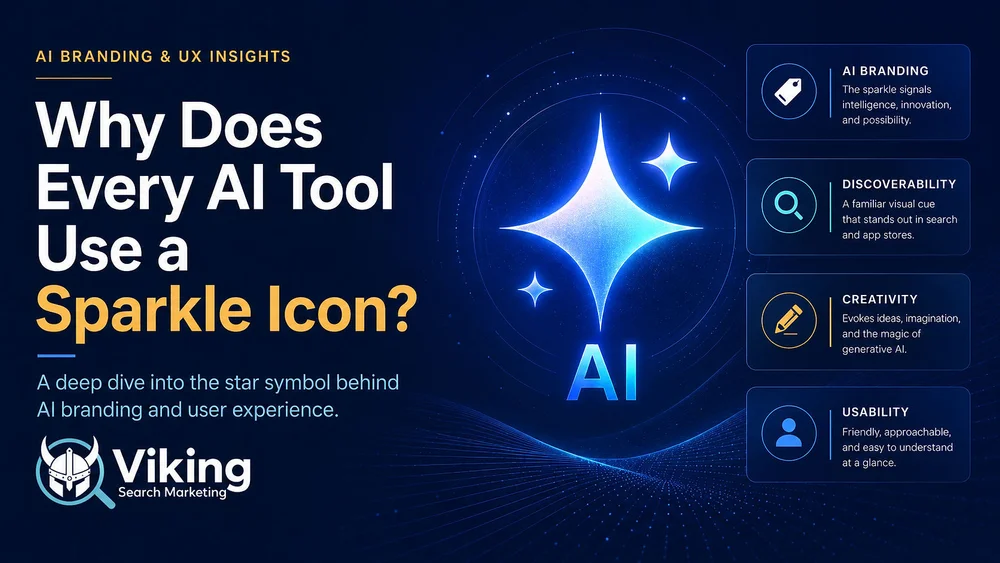
Artificial intelligence is everywhere now. It shows up in search results, writing tools, design apps, website builders, email platforms, photo editors, spreadsheets, and customer service tools.
And if you look closely, many of these AI features share a similar visual language: the AI sparkle icon.
A sparkle. A star. A little “magic” symbol.
You have probably seen it before: a blue or purple button with a small shining star next to the letters “AI.” At first glance, it may seem like a simple design choice. But that little sparkle is doing more work than most people realize.
It has become one of the most recognizable symbols for AI-powered help.
What the AI Sparkle Icon Means
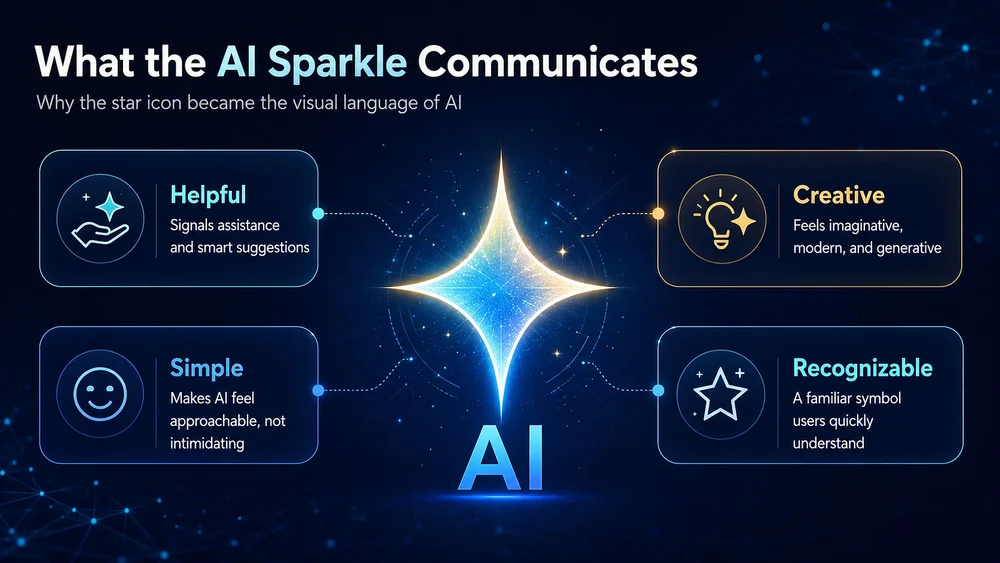
The sparkle icon is usually meant to suggest that something helpful, smart, or automated is about to happen.
In design language, sparkles often communicate:
Magic
Enhancement
Creativity
Speed
Transformation
Assistance
Something new or improved
That makes it a natural fit for AI tools. AI is often presented as something that can help you write faster, summarize information, generate ideas, edit images, organize data, or answer questions. The sparkle gives users a quick visual cue that the feature can help improve or create something.
In other words, the icon says, “Click here, and this tool can help.”
Why Not Use a Robot Icon?
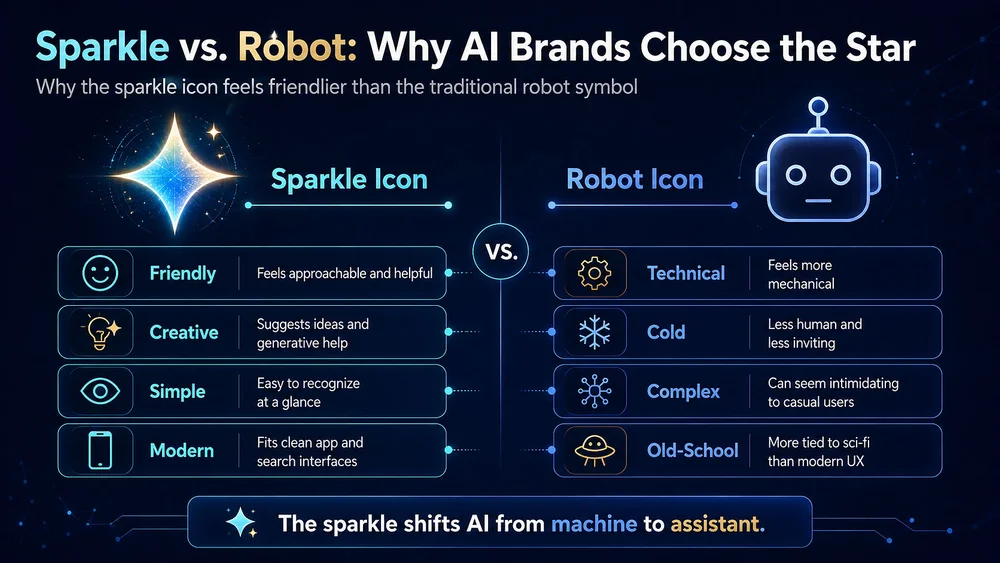
For a long time, robots were the obvious symbol for artificial intelligence. A robot head made sense because AI was often associated with machines, automation, and futuristic technology.
But the robot icon can also feel cold, mechanical, or intimidating.
That matters because many people are still hesitant about AI. Some worry it will be too technical. Some do not trust it. Others feel overwhelmed by how quickly the technology is changing.
A sparkle feels softer.
It does not suggest a machine replacing someone. It suggests a tool helping someone. It feels more like a creative assistant than a robot taking over.
That is why many brands use the sparkle instead of a robot. It makes AI feel approachable, friendly, and useful.
The Sparkle Suggests “Magic,” But Not Too Much Magic
The sparkle icon works because AI often feels a little magical to users.
You type a prompt, and a draft appears. You ask a question, and the answer is summarized. You upload an image, and the background disappears. You click a button, and a messy paragraph becomes polished.
That experience can feel like magic.
But the sparkle is also abstract enough to avoid overexplaining the technology. It does not need to show a brain, a circuit board, a robot, or a computer chip. It simply represents the result: improvement.
The user does not always care how the AI works. They care that it helps them do something faster or better.
That is why the sparkle has become such a strong AI symbol. It focuses on the benefit, not the machinery behind it.
Why the Star Shape Works So Well
The star is one of the oldest visual symbols for attention and importance. We use stars to mark favorites, rate products, highlight quality, and represent achievement.
In the context of AI, the star shape adds another layer of meaning.
It can suggest:
A bright idea
A helpful recommendation
A better result
A polished final version
A feature worth noticing
That makes it very useful in software design. A tiny sparkle icon can sit next to a button, inside a toolbar, or near a text box without taking up much space. Users can quickly learn that the sparkle means AI assistance is available.
It becomes a universal shortcut.
Why AI Icons Are Often Blue or Purple
Many AI icons use blue, purple, aqua, or gradient colors. This is not random.
Blue often suggests trust, technology, clarity, and reliability. Purple often suggests creativity, imagination, and innovation. Aqua or neon tones can make the icon feel modern and digital.
When these colors are paired with a sparkle, the message is clear:
This is a smart, modern feature that can help you create, improve, or discover something.
That is why an icon like a blue square with a white sparkle and “AI” text works so well. It is simple, high contrast, easy to recognize, and instantly connected to digital assistance.
The Icon Also Reduces Friction
Good interface design helps users understand what to do without needing a long explanation.
The AI sparkle icon reduces friction because it tells users, “There is help available here.”
A person using a website builder may not know how to write a headline. A business owner may not know how to create a blog post. Someone editing an image may not know how to remove an object. A user writing an email may not know how to make it sound more professional.
The sparkle icon gives them a clear next step.
It makes AI feel like an option, not a requirement.
That matters. If AI is presented too aggressively, users may resist it. But if it appears as a small helpful button, they may be more willing to try it.
The Branding Challenge: Everyone Looks Similar
There is one downside to the sparkle icon: it is becoming very common. Because so many platforms use stars and sparkles for AI features, the symbol is starting to feel generic.
Website builders, writing tools, design apps, search engines, and productivity platforms often use very similar AI buttons.
That creates a branding challenge.
The sparkle is useful because people recognize it. But if every brand uses the same symbol, it becomes harder to stand out.
That is why businesses should think carefully about how they use AI visuals. The sparkle can be part of the design, but it should still match the brand’s colors, tone, and personality.
For example, a clean blue AI icon may work well for a search marketing company because it feels trustworthy and technical. A more colorful sparkle might work better for a design or creativity tool. A minimal black-and-white sparkle could work for a luxury brand.
The symbol may be common, but the execution should still feel intentional.
What the AI Sparkle Says About Search
The sparkle icon is also showing up more often in search experiences.
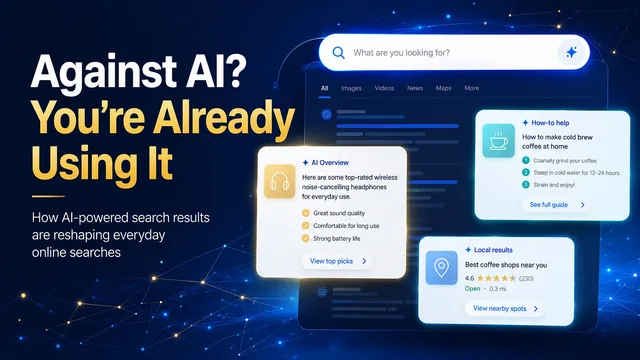
When users see a sparkle next to an AI answer, AI overview, content suggestion, or search assistant, it signals that the result is not just a traditional link. It is generated, summarized, or enhanced by an AI-powered system.
This is important for businesses because customers are becoming more familiar with AI-assisted search. Even people who say they do not use AI may still interact with AI features in Google, Bing, website builders, social platforms, and everyday apps.
The sparkle has become a visual bridge between traditional search and AI-powered answers.
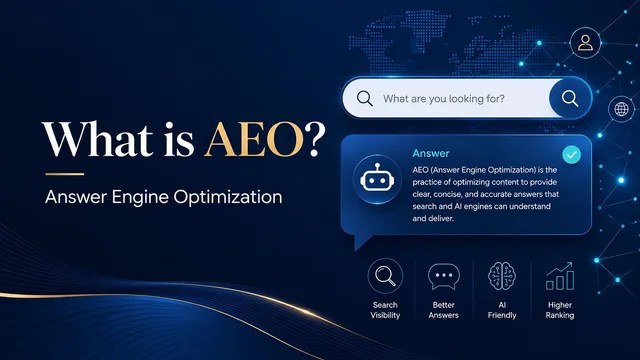
It teaches users that search is no longer only about typing a query and clicking a link. Search is becoming more conversational, more summarized, and more answer-focused.
What Businesses Can Learn from the AI Icon
The popularity of the sparkle icon teaches an important lesson: people do not just respond to technology.
They respond to how technology is presented.
AI can feel intimidating when it is framed as complex, technical, or disruptive. But it feels more approachable when it is framed as helpful, creative, and easy to use.
That same principle applies to business websites.
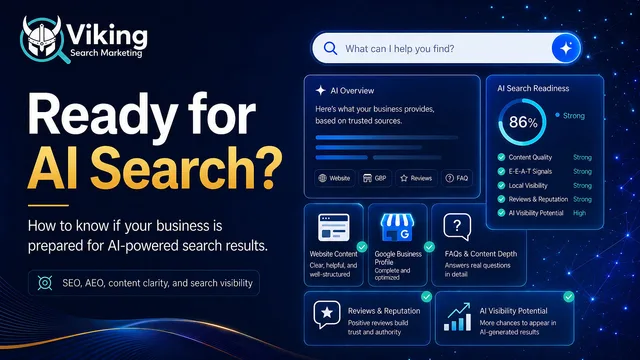
If your business wants to be found in AI-powered search results, your content should be easy to understand. Your services should be clearly explained. Your Google Business
Profile should be accurate. Your reviews should support what you want to be known for.
Your website should answer real customer questions.
AI search tools need clarity.
So do customers.
Final Thoughts
The AI sparkle icon may look simple, but it has become one of the clearest symbols of modern digital assistance.
People use it because it communicates help, creativity, improvement, and transformation in a small, friendly visual form. It makes AI feel less intimidating and more useful.
That is why the star has become the unofficial symbol of AI tools.
It tells users that something can be created, improved, summarized, polished, or answered with a little help.
For businesses, the bigger lesson is this: AI is not just changing how tools look. It is changing how people search, discover, and interact with information online. And whether you love AI or feel hesitant about it, that little sparkle is probably going to keep showing up.
If that sparkle icon has you wondering what AI search actually means for your own website, Is Your Business Ready for AI Search? and You May Be Against AI, But You Are Already Using It are good next reads. Viking Search Marketing also helps businesses prepare for AI-powered search without losing sight of the SEO fundamentals underneath it.